
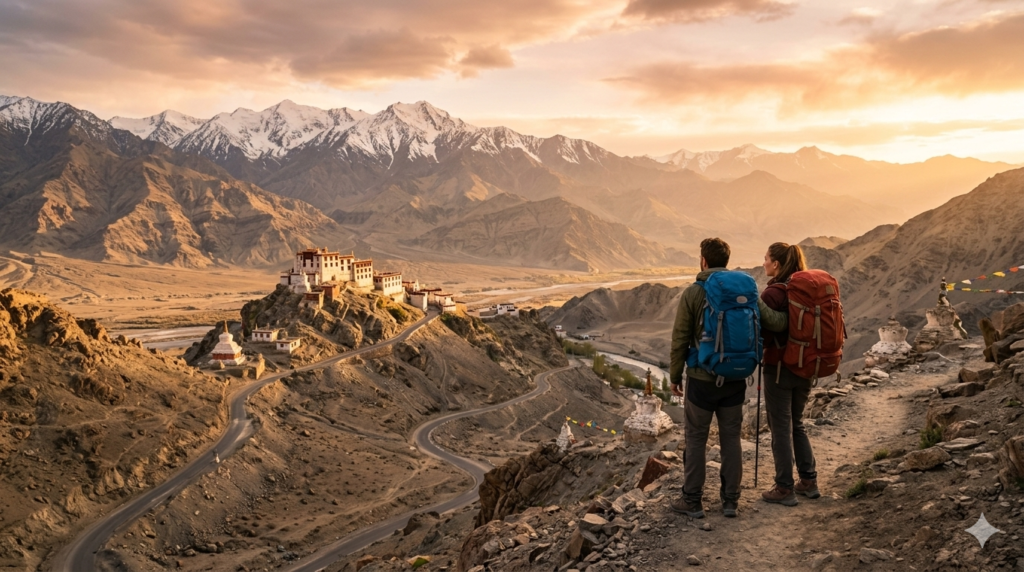
For travellers who love mountains, remote landscapes and unforgettable road trips, backpacking in Ladakh and Spiti Valley is one of the most exciting adventures in India. In 2026, these Himalayan regions are attracting thousands of backpackers every year because of their dramatic scenery, ancient monasteries and thrilling mountain roads.
If you want to explore high-altitude deserts, star-filled night skies and unique Tibetan culture, this guide will help you plan backpacking in Ladakh and Spiti Valley on a realistic budget.
Why Backpacking in Ladakh is So Popular
Ladakh is often called the “Land of High Passes,” and for good reason. The region sits at an altitude of more than 3,000 meters and offers some of the most stunning landscapes in the Himalayas.
One of the main reasons backpacking in Ladakh has become popular is the unique combination of adventure and culture. Travellers can explore ancient Buddhist monasteries, ride through winding mountain roads and camp beside turquoise lakes like Pangong Tso.
Another reason for the growth of backpacking in Ladakh is the rise of affordable travel options. Homestays, hostels and budget transport have made this once-expensive destination accessible for young travellers.
Ladakh vs Spiti Valley: Which One Should You Choose?
Both Ladakh and Spiti Valley offer incredible landscapes, but they provide slightly different experiences.
Ladakh is more famous and has better tourism infrastructure. It includes iconic destinations like Leh, Nubra Valley and Pangong Lake.
Spiti Valley, located in Himachal Pradesh, is quieter and less crowded. It offers dramatic desert mountains, ancient monasteries and traditional villages.
Many travellers combine both destinations in one trip, making backpacking in Ladakh and Spiti Valley a complete Himalayan adventure.
Best Places to Visit While Backpacking
If you are planning backpacking in Ladakh, here are some must-visit destinations.
Leh – The Gateway to Ladakh
Leh is the main town and starting point for most backpacking journeys. It is known for its monasteries, vibrant markets and mountain views.
Top attractions:
Leh Palace
Shanti Stupa
Local Tibetan markets
Most travellers spend their first two days here to acclimatise before continuing their journey.
Nubra Valley – Desert Between Mountains
Nubra Valley is famous for its sand dunes, double-humped camels and scenic landscapes. It is one of the highlights of backpacking in Ladakh.
Popular attractions:
Diskit Monastery
Hunder Sand Dunes
Camel safari experience
The valley offers a unique contrast of desert and snow-covered mountains.
Pangong Lake – The Iconic Himalayan Lake
Pangong Lake became famous after appearing in Bollywood movies, but its natural beauty is far more impressive in reality.
This high-altitude lake changes colours throughout the day, making it one of the most photographed locations during backpacking in Ladakh.
Camping beside the lake is a magical experience, especially under a sky full of stars.
Budget for Backpacking in Ladakh
Although the region looks remote, travelling here can be surprisingly affordable. The cost of backpacking in Ladakh depends on travel style, accommodation choices and transport.
Typical budget for a 7–8 day trip:
Flights to Leh: ₹6,000 – ₹12,000
Hostel or homestay stay: ₹800 – ₹1,500 per night
Local transport or bike rental: ₹1,200 – ₹2,000 per day
Food expenses: ₹400 – ₹700 per day
Estimated total cost for backpacking in Ladakh:
₹25,000 – ₹40,000 per person.
Travellers who choose shared taxis or group tours can reduce costs further.
Best Time for Backpacking in Ladakh
The best season for backpacking in Ladakh is between May and September. During these months, most mountain roads remain open and weather conditions are comfortable for travel.
Winter months bring extremely cold temperatures and heavy snowfall, which can block many roads and make travel difficult.
July and August are the most popular months because lakes and valleys look especially beautiful during this time.
Essential Packing List for Ladakh Backpacking
Because of the high altitude and unpredictable weather, packing carefully is very important.
Clothing essentials:
Thermal inner layers
Warm jacket
Windproof outer layer
Comfortable trekking pants
Travel gear:
Backpack (50–60L)
Reusable water bottle
Power bank
Sunglasses with UV protection
Proper preparation makes backpacking in Ladakh much more comfortable and enjoyable.
Safety Tips for High-Altitude Travel
Ladakh’s altitude can affect travellers who are not prepared. Taking precautions is essential.
Important safety tips:
Spend at least two days acclimatising in Leh
Drink plenty of water
Avoid alcohol during the first few days
Walk slowly and avoid overexertion
These simple steps help travellers adjust to the altitude and enjoy backpacking in Ladakh without health issues.
Why Backpacking in Ladakh is a Life-Changing Experience
Beyond its stunning landscapes, Ladakh offers a unique spiritual and cultural experience. The peaceful monasteries, friendly locals and quiet mountain villages create a deep sense of connection with nature.
Many travellers say that backpacking in Ladakh is not just a trip but a journey that changes their perspective on travel and life.
Final Thoughts
If you are looking for adventure, breathtaking scenery and unforgettable road trips, backpacking in Ladakh and Spiti Valley should be on your travel bucket list.
With affordable travel options and improved connectivity, 2026 is the perfect time to explore these Himalayan gems.